Contractor Websites That Convert and Rank

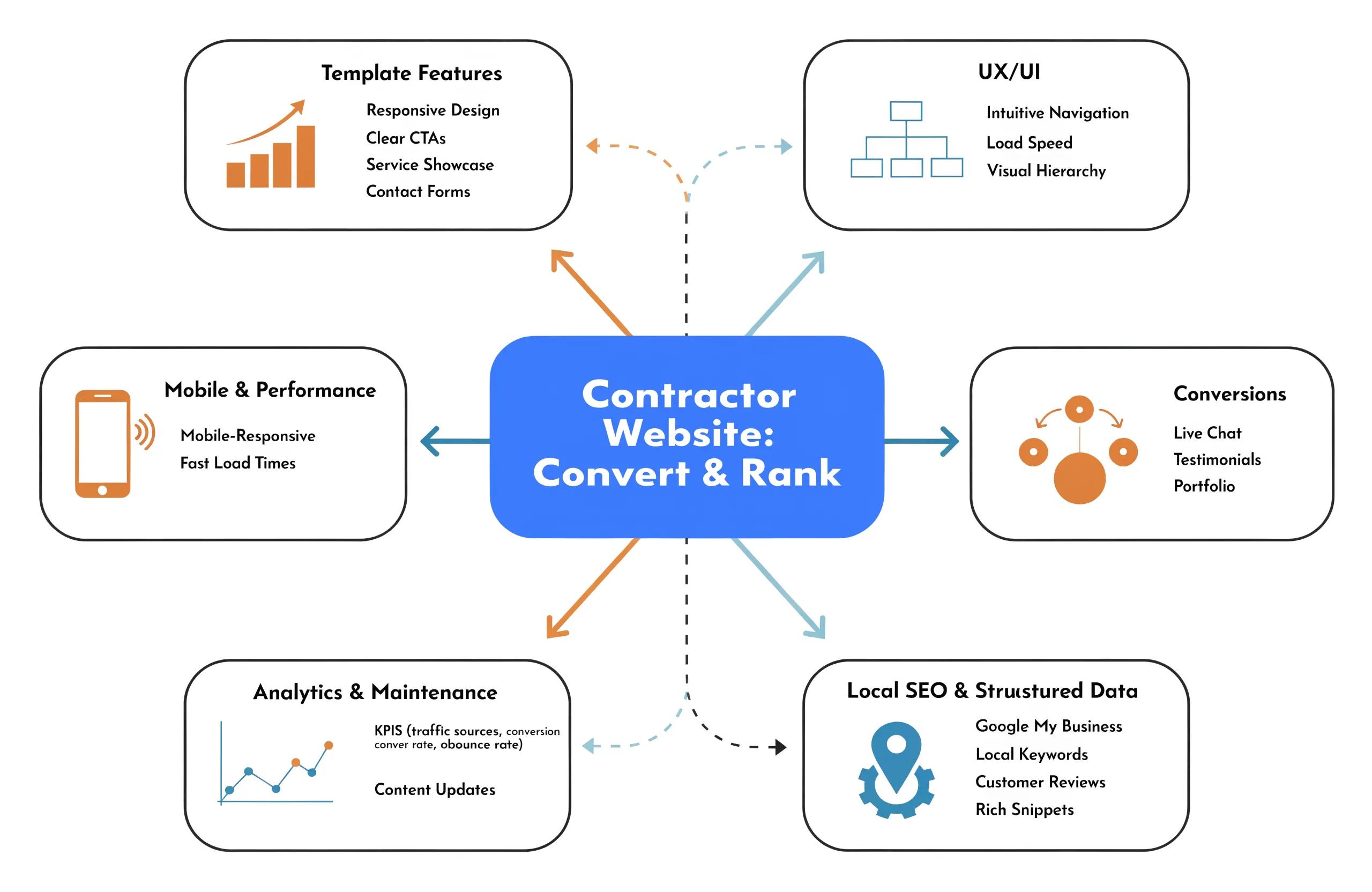
Creating a contractor website that not only looks appealing but also converts visitors into leads is a critical challenge. A well-designed website can serve as a powerful tool for contractors, enhancing visibility and driving more customer engagement. This article delves into effective contractor website templates and design strategies, as well as SEO techniques that improve ranking and local visibility. Whether you are starting from scratch or looking to optimize your existing website, understanding these elements can significantly impact your business growth. Readers will learn about the best templates for conversions, design optimization tips, essential SEO strategies, and proven techniques for enhancing lead generation. We will also cover the importance of mobile optimization and monitoring performance metrics.
Key Takeaways
- Choosing responsive contractor website templates improves usability across devices and increases lead generation opportunities.
- Clear calls-to-action and user-friendly contact forms significantly enhance visitor conversion rates on contractor websites.
- Optimizing website design with intuitive navigation, fast load speeds, and visual hierarchy boosts user engagement and conversions.
- Incorporating live chat, customer testimonials, and portfolio galleries builds trust and encourages visitor bookings.
- Local SEO tactics like Google My Business optimization, local keywords, and customer reviews improve local search rankings.
- Using structured data enhances search engine understanding, resulting in rich snippets and higher click-through rates.
- Mobile responsiveness is critical as over half of web traffic comes from mobile devices, impacting bounce rates and leads.
- Tracking KPIs such as traffic sources, conversion rates, and bounce rates enables informed website performance improvements.
- Regular content updates and performance reviews keep contractor websites relevant and competitive in evolving markets.
What Are the Best Contractor Website Templates for High Conversion?
When designing a contractor website, selecting the right template is paramount. High-converting contractor templates are specifically designed to enhance usability, promote services, and generate leads. The effectiveness of these templates can greatly influence user experience and conversion rates.
Which Template Features Drive Increased Lead Calls and Bookings?
Several key features of contractor website templates significantly boost lead calls and bookings:
- Responsive Design: Ensures that the website functions well across all devices, accommodating users on smartphones, tablets, and desktops, ultimately increasing reach.
- Clear Call-to-Action (CTA): Prominent and clear CTAs encourage potential customers to take immediate action, greatly enhancing booking rates.
- Service Showcase: Templates that effectively showcase services using images and descriptions engage visitors, allowing them to better understand what’s offered.
- Contact Forms: Incorporating user-friendly contact forms straight on the homepage reduces friction in booking processes.
These features help streamline navigation and effectively convert visitors into customers, making them essential in contractor websites.
How Do Trade Business Website Examples Illustrate Effective Template Use?
Examining successful trade business websites reveals several practical insights into effective template utilization. For instance, businesses that effectively employ visual storytelling through professional photography and concise service descriptions report better engagement rates. Template examples show how integrating a clean layout not only enhances user experience but also encourages returns.
It's evident from these examples that contractors who adopt high-quality templates with lead-generating features observe a positive impact on their booking rates.
How to Optimize Contractor Website Design for Maximum Conversion and User Experience?
Once the right template is selected, the next step is optimizing the website for maximum conversion. This involves integrating user experience (UX) and user interface (UI) design principles to create an inviting atmosphere for visitors.
What UX/UI Design Tips Improve Engagement on Contractor Websites?

Effective UX/UI design tips to consider include:
- Intuitive Navigation: Simplifying the navigation bar helps users find critical information quickly, encouraging them to explore the site more thoroughly.
- Load Speed Optimization: Ensuring fast loading times minimizes bounce rates, keeping users engaged.
- Visual Hierarchy: Implementing a clear visual hierarchy allows users to understand the importance of various elements on the page at a glance, directing them toward key actions.
Incorporating these design tips significantly enhances user engagement and increases the likelihood of conversions on contractor websites.
Which Website Features Are Critical for Contractors to Convert Visitors?
Key website features that are essential for converting visitors include:
- Live Chat Support: Providing real-time assistance helps in addressing visitor queries instantly, improving their experience and likelihood to convert.
- Customer Testimonials: Including authentic testimonials builds trust and social proof, influencing potential customers positively.
- Portfolio Gallery: Displaying past work can effectively illustrate expertise and provide examples of quality service, further persuading visitors to book a service.
These features collectively create a powerful ecosystem that fosters conversions by making user interactions smoother and more effective.
To further boost conversions, contractors should consider integrating strategies specifically designed for lead generation and revenue growth.
Website Optimization for Lead Generation and Revenue Growth
To increase sales and help PT. LVC grow, their website needs to be optimized to generate leads or potential customers, ultimately boosting revenue. Increasing revenue is PT. LVC current primary objective. To achieve this, the conversion rate optimization theory developed by Chris Goward (2012) will be utilized, with a qualitative approach. Enhancing PT. LVC Website Marketing Strategy To Generate Leads Through Conversion Rate Optimization (CRO), AR Qastharin, 2024
How Do SEO Strategies Help Contractor Websites Rank Locally and Nationally?
Effective SEO strategies are essential for improving the rankings of contractor websites both locally and nationally. By utilizing these strategies, contractors can enhance their online visibility and attract more local clients.
What Local SEO Tactics Are Essential for Contractor Websites?

To ensure local visibility, contractors should employ key local SEO tactics:
- Google My Business Optimization: Creating and optimizing a Google My Business (GMB) profile can increase the likelihood of appearing in local searches.
- Local Keywords: Incorporating location-specific keywords into website content boosts relevance for local searches, improving rankings.
- Customer Reviews: Encouraging satisfied clients to leave positive reviews enhances local credibility and can influence search rankings.
Implementing these local SEO tactics can vastly improve a contractor's local online presence.
How Does Structured Data Improve Search Rankings and Click-Through Rates?
Structured data, or schema markup, enhances search engines' understanding of website content, which can lead to better rankings. By marking up important aspects of your services, you can improve how search engines display your business in search results. Benefits include:
- Rich Snippets: Structured data can enhance listings with rich snippets, showcasing additional information that attracts clicks.
- Improved Indexing: When search engines better understand content, this can result in higher search positions as they become more relevant to user queries.
This underscores the importance of structured data in boosting online visibility for contractor websites.
What Are Proven Conversion Optimization Techniques for Contractor Websites?
Conversion optimization is an ongoing process that requires understanding your audience and testing various strategies. Here are some proven techniques that can effectively enhance conversion rates.
Which Calls to Action Generate the Most Qualified Leads?
Using targeted and compelling calls to action (CTAs) is essential for converting visitors into leads. Here are some effective CTA strategies:
- Action-Oriented Language: Phrasing CTAs in a direct and action-oriented way encourages users to engage. For example, "Get a Free Quote" or "Schedule Your Consultation Today."
- Visibility: Positioning CTAs prominently on pages, especially at the top and bottom, ensures they are seen and considered by visitors.
- Incentives: Offering limited-time offers or discounts associated with CTAs can create urgency for potential customers.
By effectively utilizing impactful CTAs, contractors can significantly increase lead generation and conversion success rates.
How Do Testimonials and Portfolio Examples Increase Trust and Bookings?
Testimonials and portfolio examples play a crucial role in establishing credibility and trust with potential customers. Here’s how they increase conversions:
- Social Proof: Testimonials from satisfied customers serve as validation for the quality of services, making prospects feel more confident in their decision.
- Portfolio Displays: Showcasing completed projects illustrates the capability and range of services offered, allowing potential clients to visualize successful outcomes.
These elements work together to build a trustworthy reputation, increasing the likelihood that visitors will convert to bookings.
Why Is Mobile and Responsive Design Critical for Contractor Websites That Rank?
With an increasing number of consumers searching for services via mobile devices, ensuring that contractor websites are mobile-responsive is no longer optional—it's a necessity.
How Has Mobile Traffic Growth Impacted Contractor Website Performance?
Mobile traffic growth has significantly impacted website performance metrics. Studies indicate that over 54% of all web traffic originates from mobile devices as of 2021. This trend implies that contractor websites must cater to mobile users effectively.
Failure to optimize for mobile can result in:
- High Bounce Rates: Users are likely to leave if a website is difficult to navigate on a mobile device.
- Loss of Potential Leads: Inaccessibility can severely diminish conversion opportunities from local searches conducted via smartphones.
Contractors should prioritize mobile responsiveness to accommodate this growing audience segment.
What Mobile Design Elements Ensure Seamless User Experience?
To ensure seamless user experience on mobile devices, key design elements should be integrated:
- Simplified Navigation: Menus should be compact and easily accessible, allowing users to navigate without hassle.
- Touch-Friendly Buttons: Ensuring buttons are adequately sized and spaced for touch interactions enhances usability.
- Fast Load Times: Investing in backend optimizations for speed ensures that mobile users remain engaged.
By focusing on these design elements, contractors can enhance mobile user experience which is critical for conversion.
How to Implement and Monitor a Successful Contractor Website Strategy?
The implementation and monitoring of a strategic approach are essential for maintaining an effective contractor website. This includes making adjustments based on data analytics and user feedback.
What KPIs Should Contractors Track to Measure Website Success?
Contractors should monitor several key performance indicators (KPIs) to evaluate website effectiveness:
- Traffic Sources: Understanding where traffic comes from helps to optimize marketing efforts.
- Conversion Rate: Measuring how many visitors convert to customers provides direct insight into effectiveness.
- Bounce Rate: Tracking which pages users leave quickly can highlight navigation issues.
Keeping an eye on these KPIs allows contractors to make informed decisions and improvements.
How Often Should Websites Be Updated Based on Industry Trends and Data?
Regular updates are crucial to keep content fresh and relevant. Here are some guidelines:
- Content Refresh: Aim to revisit primary content every 6-12 months to ensure it aligns with current trends and information.
- Performance Review: Analyzing website performance metrics quarterly can help identify areas needing updates.
- Industry Trends: Staying informed about industry changes and implementing relevant updates helps maintain competitiveness.
By adhering to these guidelines, contractors can ensure their websites remain a valuable asset in attracting leads and converting visitors.
Frequently Asked Questions
1. How important is website speed for contractor websites?
Website speed plays a crucial role in user experience and conversion rates. Studies show that even a one-second delay in loading time can lead to a significant increase in bounce rates, meaning visitors leave before even exploring your services. Faster websites not only keep visitors engaged but also improve your rankings on search engines, as speed is a ranking factor. Optimizing images, using efficient coding, and leveraging browser caching are some ways to enhance speed and performance.
2. Why should contractors use Google My Business?
Google My Business (GMB) is an essential tool for contractors looking to improve their local SEO. By creating and optimizing a GMB profile, contractors can enhance their visibility in local search results, making it easier for potential clients to find and contact them. This tool allows businesses to share important information, such as service areas, hours of operation, and customer reviews, which builds trust and encourages more leads. Utilizing GMB effectively can significantly boost local presence and traffic.
3. What role do social media platforms play in promoting contractor websites?
Social media platforms are vital for promoting contractor websites as they provide a space to engage with a broader audience. Sharing project photos, client testimonials, and updates on social media helps build brand awareness and credibility. Platforms like Facebook, Instagram, and LinkedIn can drive traffic to your website through links in posts or advertisements. Additionally, social media allows for customer interaction and feedback, fostering community and trust around your brand.
4. How can contractors effectively gather and showcase customer reviews?
Collecting and showcasing customer reviews can be done via email requests after project completion, direct links on your website, or through social media channels. Encourage clients to leave honest feedback by making the process simple, such as providing links or forms. Displaying these reviews prominently on your website, such as in a testimonials section, builds credibility and trust with new visitors. Positive reviews can significantly influence potential clients’ decisions, improving conversion rates.
5. What are some effective content marketing strategies for contractors?
Content marketing strategies for contractors can include creating blog posts, guides, or videos that address common questions or challenges faced by potential clients. This positions you as an authority in your field while also improving SEO. Educational content about home improvement tips, project showcases, or seasonal maintenance advice can attract traffic. Regularly updating your content and optimizing it for search engines keeps your website relevant and engaging for visitors, driving more leads.
6. Should contractors consider using email marketing, and how?
Yes, email marketing is an effective strategy for contractors to maintain communication with leads and past clients. By building an email list, you can send newsletters, special offers, and project updates directly to interested individuals. Personalizing content increases engagement, and regular communication helps keep your business top-of-mind when clients are ready to make a decision. Tools like Mailchimp or Constant Contact can streamline your efforts and provide analytics to track success.
7. What ongoing website maintenance should contractors prioritize?
Ongoing website maintenance is crucial for ensuring optimal performance and security. Contractors should regularly update content to reflect real-time information, check for broken links, and monitor site speed. Additionally, installing security updates and backups helps protect against potential data loss or attacks. Periodically reviewing SEO strategies and website design helps adapt to changing technologies and trends, ensuring your site remains effective in generating leads and engaging users.
Conclusion
Creating a well-designed contractor website significantly enhances your ability to attract and convert leads, providing a strong foundation for business growth. By utilizing the best templates, implementing effective SEO strategies, and optimizing user experience, contractors can effectively increase their online visibility and client engagement. Take the next step towards transforming your website into a powerful lead-generating tool by exploring our selection of premium contractor website resources. Start optimizing your digital presence today and unlock your business's full potential.